Abstract
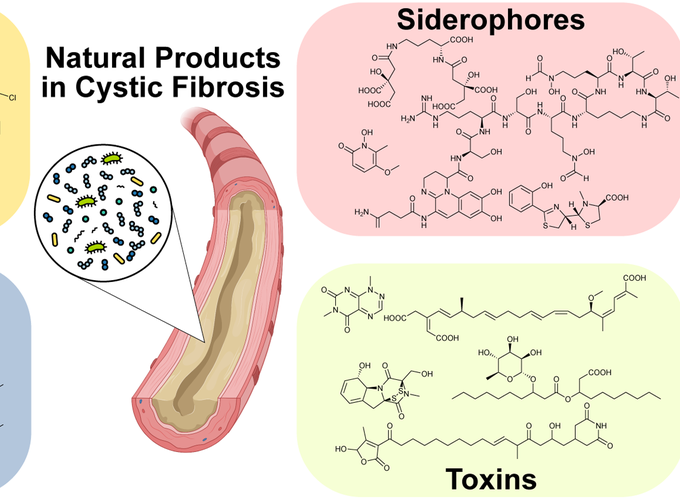
Cystic fibrosis (CF) is a life-shortening autosomal recessive genetic disorder caused by mutation in the gene encoding the CF transmembrane conductance regulator (CFTR). Dysfunction in CFTR leads to the accumulation of thick and dehydrated mucus in the respiratory tract, which serves as a substrate for a complex microbiota that includes commensal oral and respiratory bacteria and opportunistic pathogenic bacteria and fungi. During chronic infections, these microbes persist in the airways and contribute to progressive lung tissue damage, ultimately leading to respiratory failure and premature death. Within this environment, microbes synthesize a diverse repertoire of natural products, including antimicrobials, siderophores and other metallophores, signaling molecules, toxins, and other virulence factors. In this review, we thoroughly discuss natural products produced by members of the CF airway microbiota, primarily the bacterial pathogens Burkholderia spp., Pseudomonas aeruginosa, and Staphylococcus aureus and the fungal pathogens Aspergillus fumigatus and Scedosporium spp. When known, we describe the biosynthesis and roles of these natural products in microbial persistence, interspecies interactions, and virulence in the CF airway. When these roles are unknown, we infer potential roles based on evidence from the literature in different disease contexts. Finally, we briefly highlight natural products produced by the CF microbiota as novel sources for developing new antimicrobials and as drug targets to treat disease.